The Gilty Pleasure
Hey, look at this pedigree!
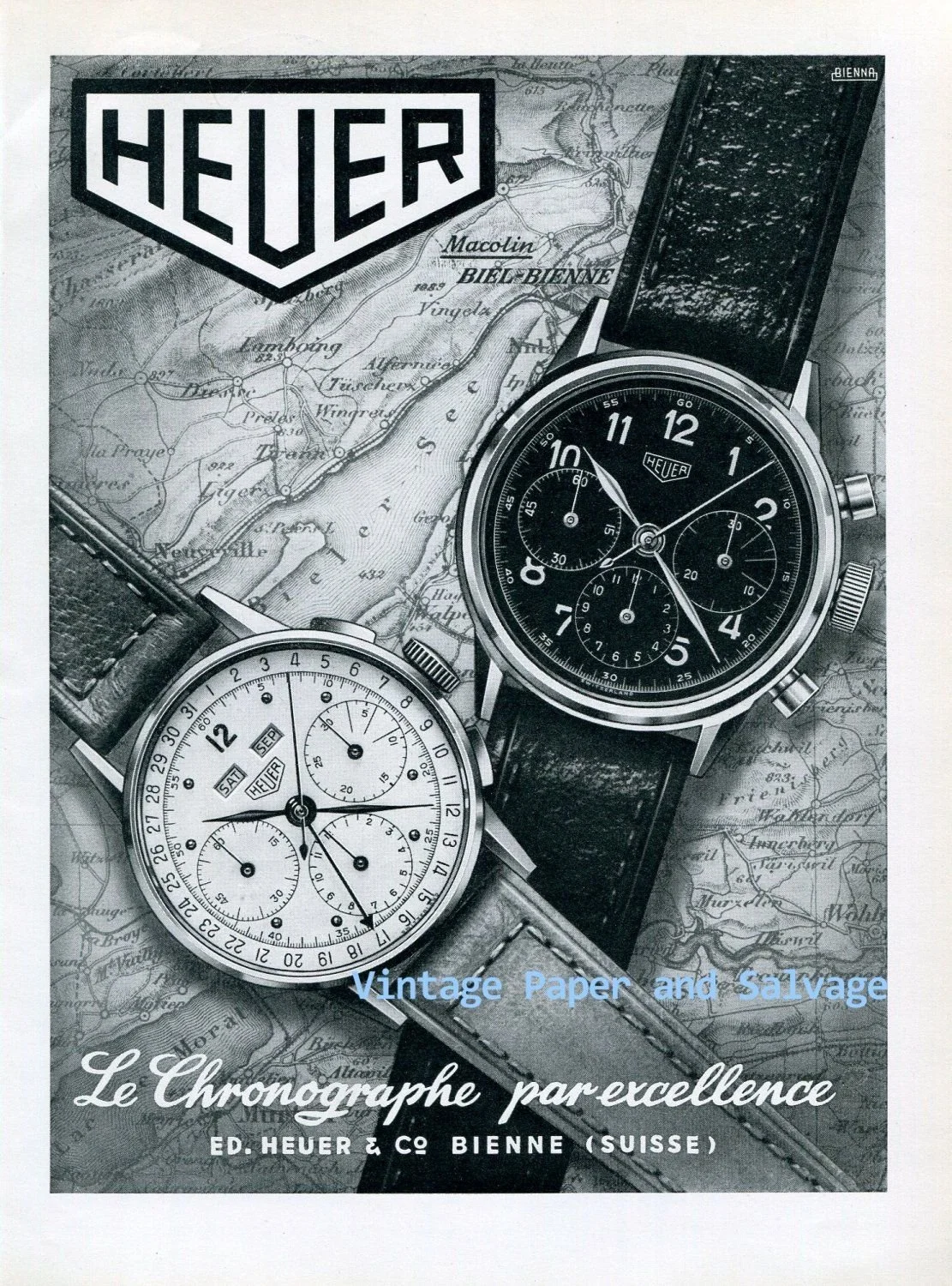
Heuer, a Swiss watch brand with a storied history dating back to its founding in 1860, has played a significant role in the evolution of precision timekeeping. Renowned for its innovation in sports chronographs, Heuer gained prominence in the mid-20th century with iconic models such as the Autavia and Carrera. The brand's commitment to accuracy was exemplified by its role as the official timekeeper of the Olympic Games and Formula One racing. In 1985, Heuer merged with TAG (Techniques d'Avant Garde), forming TAG Heuer. Throughout its history, Heuer's timepieces have garnered a reputation for precision, functionality, and a strong association with the world of motorsports, solidifying its place in the annals of watchmaking history.

Heuer has a notable history of producing influential chronographs, particularly in the mid-20th century. Models like the Autavia and Carrera gained recognition for their innovative designs and precise functionality. These chronographs, with features like tachymeter scales and subdials, became closely associated with motorsports. Heuer's significance extended to sports timing, securing roles as the official timekeeper for major events like the Olympic Games and Formula One races. The brand's focus on technological innovation and meeting the demands of athletes has solidified its chronographs as influential contributors to the development of sports watches.
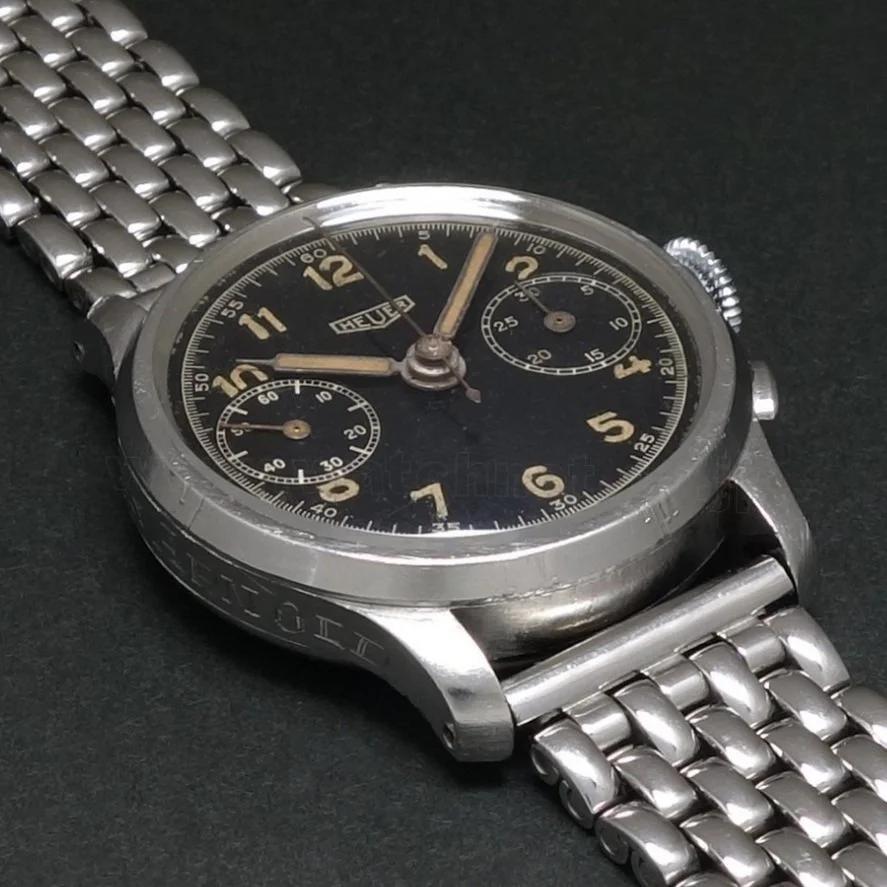
Specifications:
Maker: Heuer
Reference: Serial no.45
Caliber: Landeron-13
Movement type: Manual winding
Material: Stainless Steel
Case size: 32mm
Case type: Stainless Steel
Dial: Gilt, Original
Type of Indices: Luminous
Strap: non Original
Lug Width: 17mm
Sale Format: Purchase
Price: Listed at ¥396,000 ($2,664.64 USD)
*Disclaimer: All information is pulled directly from the source link. I hold no information on its accuracy. It is your responsibility to communicate with the seller to verify information and undergo safe practices when exchanging for a watch with a seller.
The history of gilt dials on vintage watches traces back to the mid-20th century when watchmakers sought to enhance the aesthetic appeal of timepieces. Gilt dials, characterized by a golden or bronzed finish achieved through the application of gold or gold-colored lacquer, became a popular choice for luxury watches. Brands like Rolex, Omega, and Patek Philippe embraced gilt dials, creating a distinctive and timeless look that is highly sought after by collectors today.
The benefits of gilt dials extend beyond mere visual appeal. The warm and lustrous tones of gilt dials not only add a touch of elegance but also create a sense of depth and richness. The contrast between the gold or bronze hue and the printed or applied indices and text enhances readability, especially in varying lighting conditions. Gilt dials often age gracefully, acquiring a charming patina over time, adding to the vintage character of the watch. Collectors value these timepieces not just for their historical significance but also for the craftsmanship and artistry involved in the meticulous creation of these exquisite gilt dials.
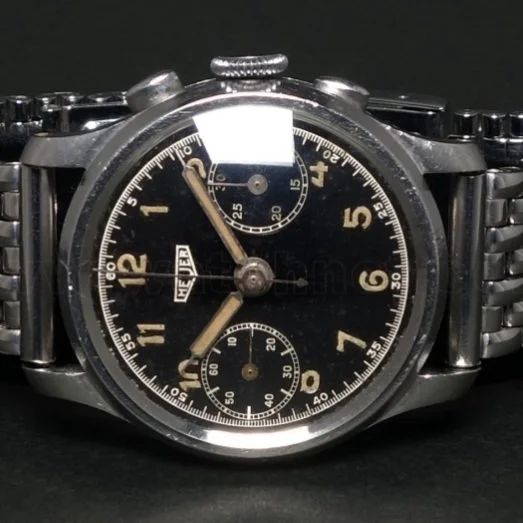
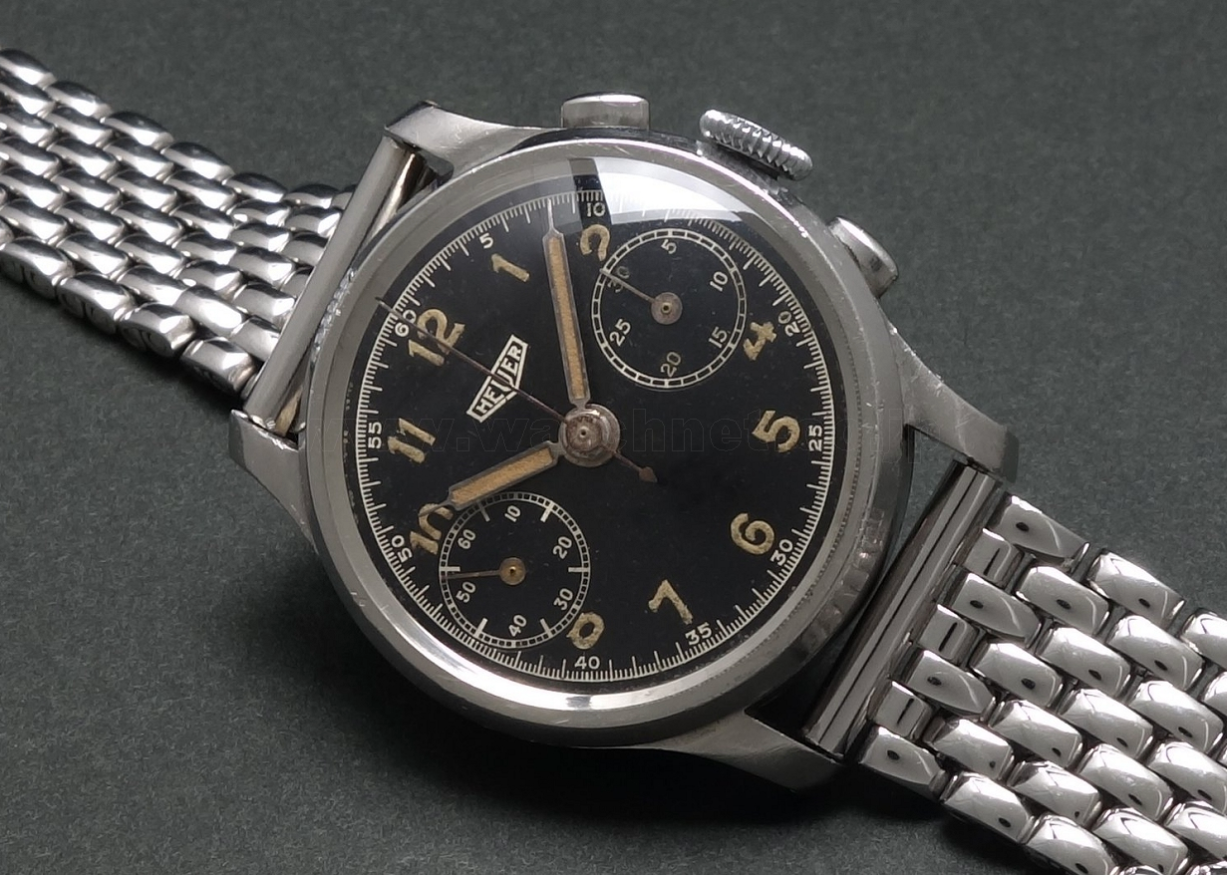
The lume contrasted against the jet black dial would not be amiss on the dashboard of a plane. None of it has flaked away or burned into the dial to the point of degradation resulting in an incredibly preserved example.
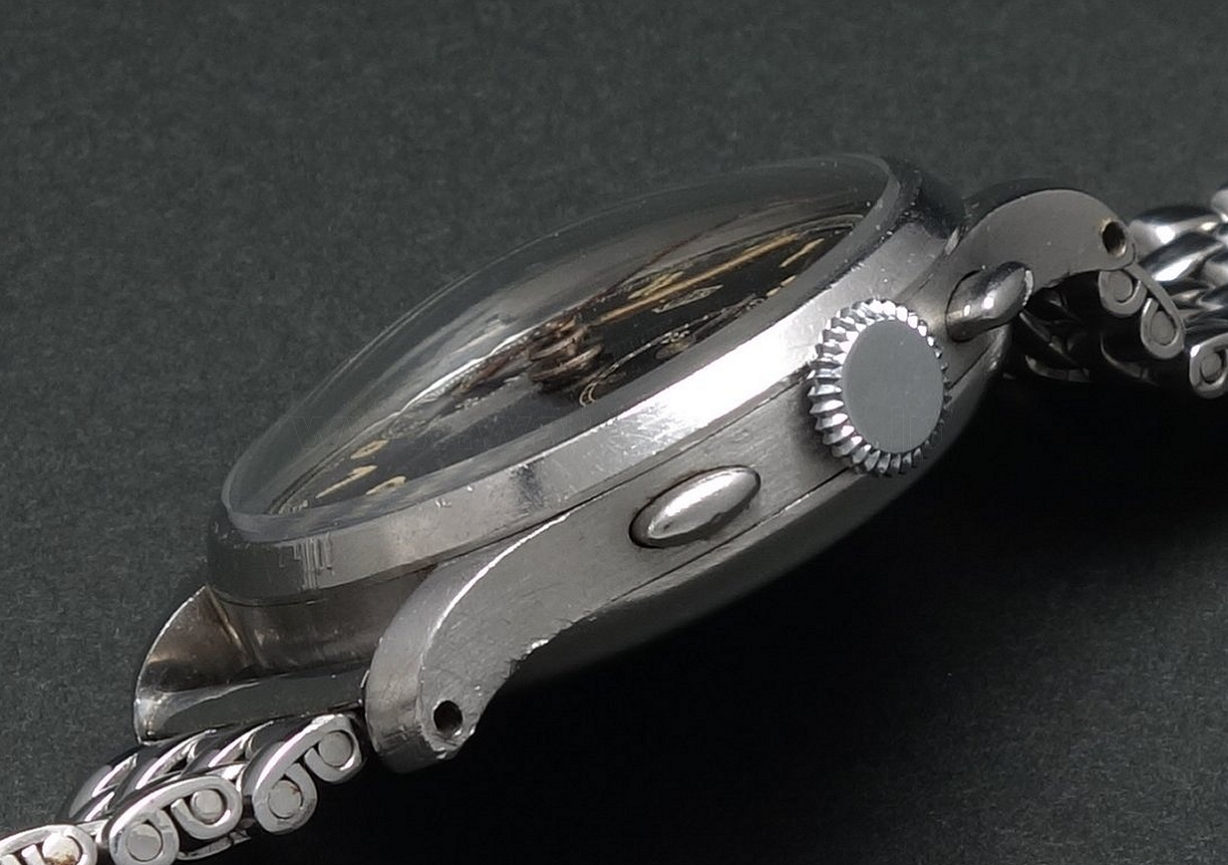
The stainless steel case looks in fantastic condition, especially knowing its age. The chronograph shows a bit of extra flare with oval pushers flanking that squashed onion crown.
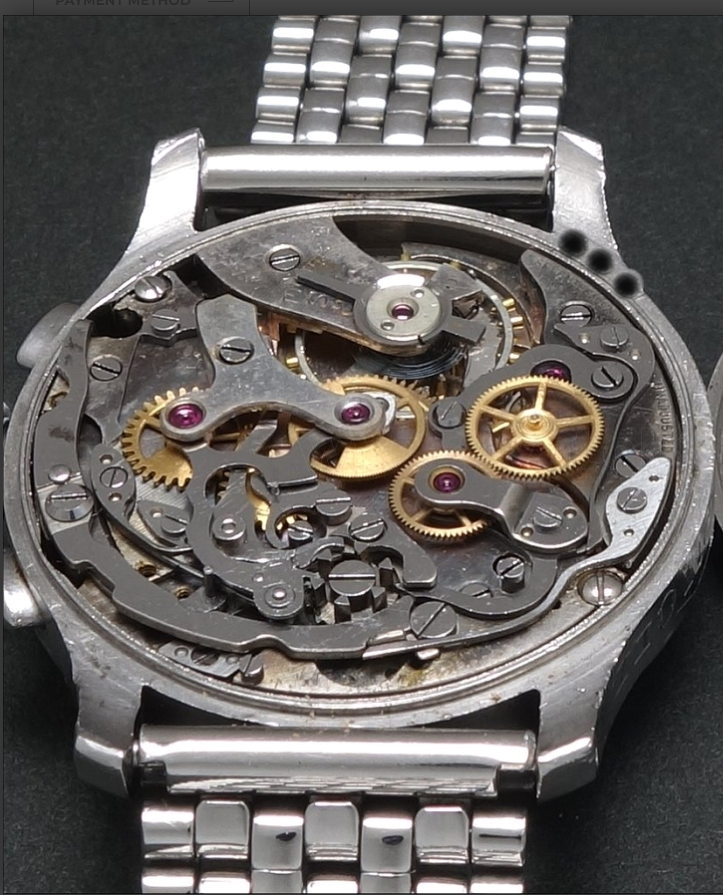
The seller provided a lovely background on this well-known movement. They state it is “equipped with the renowned Landeron-13 movement. Landeron was a high-end small-sized movement caliber manufacturer that supplied mechanisms to many brands in the chronograph industry.
The Landeron-13 chronograph movement, introduced in the mid-20th century, is a notable chapter in watchmaking history. Manufactured by the Swiss company Landeron, the Landeron-13 gained popularity for its reliable and cost-effective design. Widely utilized by various watch brands during its production years, this hand-wound movement featured a robust construction and a cam-switching mechanism for the chronograph function. While not as intricate as some high-end counterparts, the Landeron-13 proved to be a workhorse movement, offering practicality and functionality. Its affordability and widespread use contributed to its prominence in mid-range and sports watches of the time, marking it as a significant and accessible choice in the chronograph movement landscape.